Wetlands are a critical ecosystem, abating flooding and regulating waterways. NKU's Wetlands Management Professional Micro-credential enables participants to identify wetland and upland/non-wetland plants, assess wetland biodiversity and ecological quality, and learn wetland determination/delineation through investigation of in-the-field indicators.
These professional short courses will cover criteria and reporting for the Eastern Mountain Piedmont region as well as the Midwest region, and are listed in the Society of Wetland Scientists Certification Program. Our courses are primarily conducted at the NKU Research and Education Field Station (REFS).

After completing the Wetlands Management micro-credential, students will have learned:
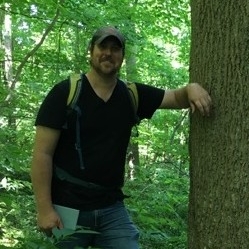
Jacob Bartley
Sr. Ecologist-Botanist, Plum Hill Ecological Services
Jacob is the owner and Senior Ecologist-Botanist for Plum Hill Ecological Services, an ecological consulting firm and native plant farm located in Northern Kentucky. Jacob is an alumnus of Northern Kentucky University and has over 20 years of experience managing projects involving applied ecology and natural areas. Jacob’s expertise include botanical inventories, ecological site assessments, vegetation monitoring, vegetation community mapping, floristic quality mapping, invasive species mapping, invasive species management, habitat restoration planning, wetland delineations, and wetland mitigation. Jacob is highly experienced in preparing habitat management plans, technical writing reports, and has conducted numerous vegetation monitoring techniques and protocols for wetland and stream mitigation projects.
Jacob has extensive experience in native plant propagation and habitat restoration practices. He currently is the Project Director of Red Stone Farm Wetland Mitigation Bank (Corps Huntington District) and provides applied ecological services for organizations in Northern Kentucky and the Cincinnati region such as NKU’s Center for Environmental Restoration, Boone County Parks, The Boone Conservancy, Campbell County Conservation District, the Arc of Appalacia, TNC, and other land conservation/management organizations. Additionally, Jacob has conducted numerous wetland delineations for private companies.
“Jacob Bartley is an amazing instructor with a vast amount of knowledge regarding wetlands. I would highly recommend any wetland course that Mr. Bartley is responsible to instruct.”
“Jacob is a capable and knowledgeable instructor. I would highly recommend this course to anyone who will be conducting wetland delineations or working in wetlands or other natural systems.”
“I’ve never learned more at a PD event!”
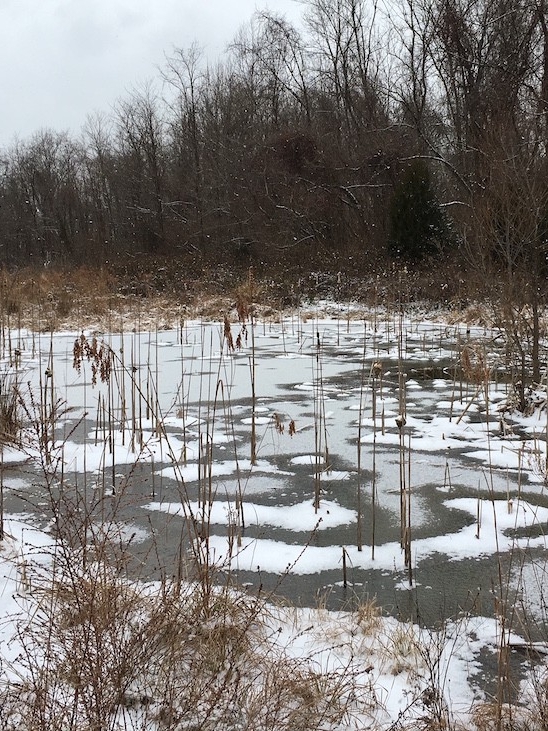
Learn plant identification tied into wetland determinations and delineations, as well as ecological quality assessments using ORAM, KYRAM, and other field protocols under winter conditions. Identifying vegetation when plants are dormant can increase your ability to evaluate habitat quality in wetlands when others are stuck in the office.
Full Course Title: Winter ID of Wetland Plants and Winter Assessments of Forested and Emergent Wetlands
Mission: This training will aid students in learning winter identification of common wetland trees, shrubs, forbs, and graminoids in the Army Corps of Engineers Eastern Mountains and Piedmont (EMP) and Midwest Region. This course will aid professionals in completing wetland determinations and delineations, as well as ecological assessments during the winter months. In addition to winter ID of wetland plants, students will also gain knowledge of completing ecological assessments to forested and emergent wetlands during the winter months with leaf off.
Focusing on winter characteristics such as winter colors, leaf buds, twigs, or leftover seed aids to ID plant species. Students will also conduct ORAM and KY-RAM wetland assessments.
Timeline: 3-day course (25 hrs). The course will be a 1/2 day in the classroom and 2.5 days in field training. The Course will require travel to diverse wetland sites in addition to the St. Anne’s field station.
Materials: Provided
Objectives:
Reminder: Dress appropriately for the weather.
Duration: 3 days (25 hours)
Dates: February 11-13, 2026
Registration Rates:
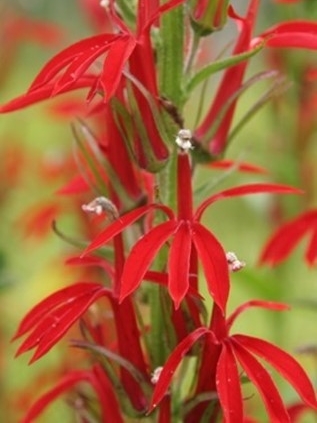
Learn to identify and assess upland or non-wetland vegetation that occurs at wetland margins or borders wetland habitat. Learn these non-wetland plants that are commonly found from live and preserved specimens. The course is taught during the period when spring flowers are still present, and woody plants have begun to leaf out. This course provides the knowledge base for accurate plant identifications required for wetland determinations and delineations, as well as ecological quality assessment of habitats.
Full Course Title: Upland Plant Identification
Mission: This training will aid students in learning the identification of common upland or non-wetland trees, shrubs, forbs, and graminoids found at wetland margins and borders of the Army Corps of Engineers Eastern Mountains and Piedmont (EMP) and Midwest Regions. This course will aid professionals in completing wetland determinations and delineations, as well as ecological assessments. In addition, students will also gain knowledge of completing ecological assessments of upland or non-wetland habitats bordering wetlands.
Timeline: 3-day course (25 hrs). The course will be mostly in field training on all three days. The course will be conducted at the St. Anne field station and will include travel to other Northern Kentucky sites in order to become familiar with those upland or non-wetland plants found at wetland borders.
Materials: Provided
Objectives:
Reminder: Dress appropriately for the weather and mosquitoes.
Duration: 3 days (25 hours)
Dates: May 13-15, 2026
Registration Rates:
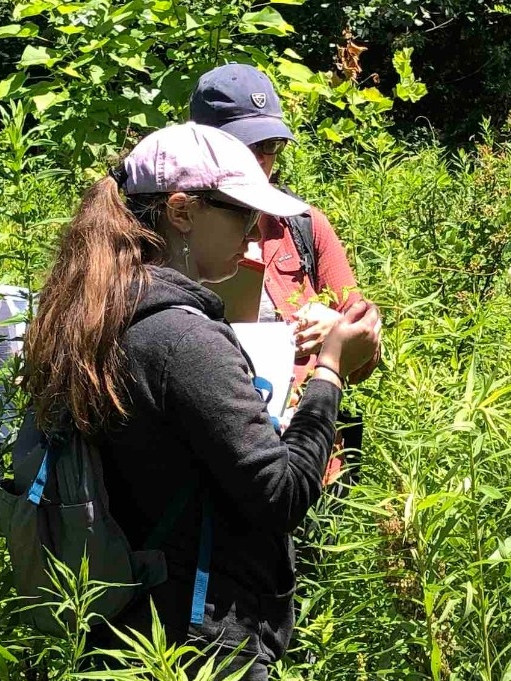
Learn to identify wetland and some common upland or non-wetland plant species from live and preserved specimens. This course provides the knowledge base for accurate plant identifications required for wetland determinations and delineations, as well as ecological quality assessment of wetland habitats. The class will travel to several different wetland sites.
Full Course Title: Common Wetland Plants Identification
Mission: This training will encompass why learning wetland plants is important for those involved in the wetland profession and associated fields. Wetland plant ID is a necessary step to learn to correctly identify wetlands. Many wetland management and assessment methods are dependent on identifying wetland plant species. The course is focused on the common wetland plant species found in the ACOE Eastern Mountains and Piedmont (EMP) Region, as well as the Midwest.
Timeline: 3-day course (25 hrs). The course will be 1 day in the classroom and 2 days in field training. The Course will require travel to diverse wetland sites in addition to the St. Anne’s field station.
Materials: Provided
Objectives:
Reminder: Dress appropriately for the weather and mosquitoes.
Duration: 3 days (25 hours)
Dates: June 17-19, 2026
Registration Rates:
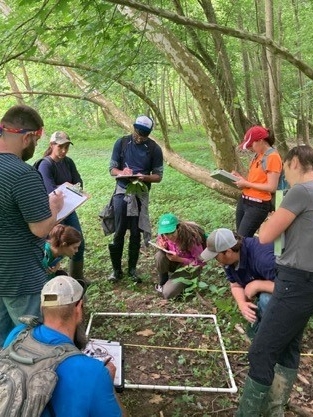
Learn field protocols to confidently locate, identify, and map wetland versus non-wetland habitats. Topics covered will focus on wetland hydrology, hydric soil, and wetland vegetation field indicators. The course will cover the 1987 US ACOE Delineation Manual and the Eastern Mountains and Piedmont Regional Supplement, as well as wetlands in the Midwest.
Full Course Title: ACOE Wetland Delineation / Regional Supplement for Eastern Mountains and Piedmont / Waters of the United States (WOTUS) Training
Mission: This training will encompass the 1987 Wetland Delineation Manual and Eastern Mountains Piedmont (EMP) / Midwest Region protocols to train an individual to identify and map the presence/boundaries of wetlands.
Timeline: 4-day course (30+ hrs). The course will be 1.5 days in the classroom and 2.5 days in the field. Field studies will take place at different locations within the area so that different types of wetlands for delineation can be experienced.
Materials: Provided
Objectives:
Topics:
Reminder: Dress appropriately for the weather and mosquitoes.
Duration: 4 days (30+ hours)
Dates:
Registration Rates:
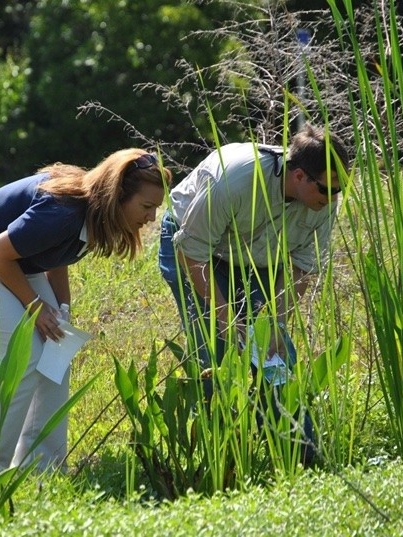
Learn to execute/conduct ecological quality assessments of existing wetlands using ORAM, KYRAM, and other field protocols. Additionally, learn how to field identify those non-native invasive plant species that invade wetlands and correctly manage them to improve habitat. Course content will also include field techniques and protocols of vegetation monitoring for both baseline conditions and monitoring project success.
Full Course Title: Rapid Assessment of Wetlands & Invasive Plant Monitoring
Mission: To gain experience in advanced ecological techniques to monitor projects that restore/enhance wetlands, and steps for removal of those non-native invasive plant species.
Timeline: 3-day course (25 hrs)
Materials: Provided
Course Description: From determining baseline conditions to project success, this 3-day course will provide and demonstrate to students applied ecology field techniques for monitoring wetland enhancement and restoration (wetland re-establishment and enhancement) projects. Class participants will obtain and practice those field techniques utilized to gather baseline data and monitor hydrology, vegetation, and soils wetland enhancement or restoration projects. Students will learn to conduct rapid wetland ecological quality assessments with ORAM and KY-WRAM, as well as vegetation assessments such as VIBI (Vegetative Index of Biotic Integrity). Classes will learn how to set up field sampling plots or stations and conduct vegetation and hydrology sampling for monitoring events. Students will acquire and exercise additional knowledge and techniques of wetland plant identification (both native and non-native invasive species), invasive plant species management, as well as refresh their knowledge of identifying and delineating wetlands vs. uplands.
Reminder: Dress appropriately for the weather and mosquitoes.
Duration: 3 days (25 hours)
Dates: August 5-7, 2026
Registration Rates:
Department of Biological Sciences
Dorothy Westerman Herrmann Science Center (SC), Room 204C
(859) 572-5110 | biology@nku.edu